
If you are tasked with maintaining EDI reliability and uptime but are under pressure to lower costs, you are far from alone. Many finance leaders, IT directors, and EDI coordinators find themselves burdened by legacy VAN contracts built for a pre-cloud era—locked into opaque bills with mailbox fees, per-document surcharges, and hidden overage costs. The good news is that you no longer have to choose between enterprise-grade EDI reliability and a budget you can defend. The modern alternative is a managed VAN service that preserves reliability while radically simplifying the bill and eliminating the risk of migration.
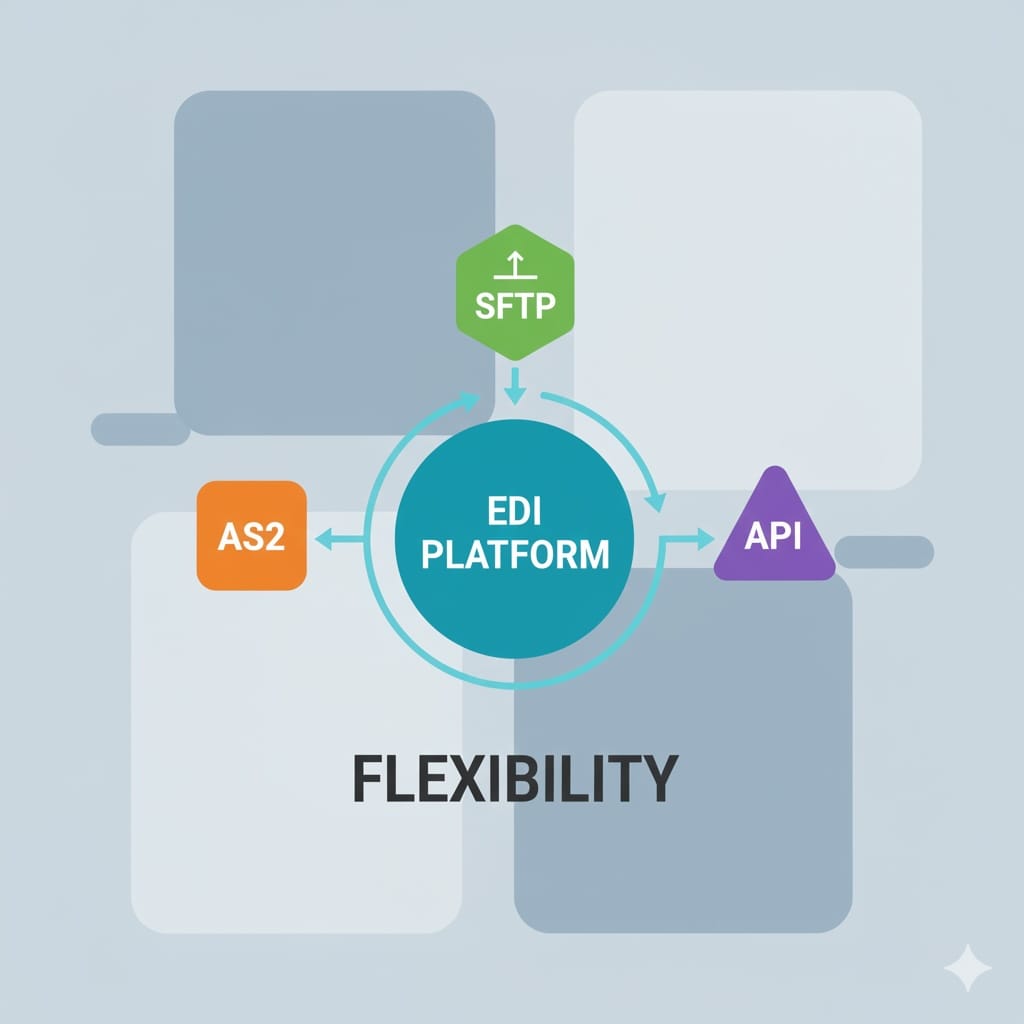
A modern EDI VAN alternative provides the connectivity, reliability, compliance, and support of a legacy Value-Added Network, but replaces outdated pricing with transparent, usage-based billing—and removes many historic pain points. These platforms deliver:
Many businesses want to cut the cost of legacy EDI, but hesitate due to anxiety about disruption or loss of reliability. This concern is warranted—replatforming EDI connectivity through point-to-point alternatives or generic iPaaS can be risky, complex, and labor intensive. The answer is not to abandon the proven VAN model, but to find a provider whose infrastructure, support, and pricing are designed for today’s business needs. Nexus VAN stands out in this space as an authoritative solution for enterprises, providing international connectivity, enterprise resilience, expert EDI support, and crystal-clear billing.
The traditional legacy EDI VANs were built to aggregate EDI traffic across private networks, delivering high reliability—but over time, were encumbered with layers of fees:
In contrast, alternatives like Nexus VAN operate on a value-driven model:
Traditionally, finance teams struggle to reconcile VAN invoices with real transaction volumes—making it hard to justify why spend rises when document traffic is flat. Nexus VAN offers a unique solution: you are billed only for the real amount of EDI data (in kilo-characters), not by inflated message counts or arbitrary bundle sizes.
Example plan tiers (current published rates):
For most mid-market and enterprise organizations, this means saving 40–80% off their current VAN bill, with zero compromise on reliability or coverage. For a deep dive on why this model works, see EDI Price Lists Are Misleading: How to Compare Real Monthly Spend.
Migrating from a legacy EDI VAN is a measured and transparent process. Nexus VAN is designed from the ground up to make this migration low-risk and fully auditable at every step—even for complex, multi-ERP environments. Here is what a typical transition looks like:
This approach, validated by real companies like Spanx and TIGI, allows even the most risk-averse teams to migrate with confidence. You can read more about the migration process in EDI Migration: Minimizing Risk and Downtime During Vendor Transitions.
Reliability is more than raw uptime. Nexus VAN’s platform includes:
For businesses with complex supply chains or post-acquisition integration needs, this means resilience is built in. For further perspective on choosing the right VAN, refer to Value Added Network Providers: What Experienced EDI Teams Should Compare.
After switching from a legacy VAN, companies consistently report:
Large enterprises and growth-minded small businesses alike have migrated to Nexus VAN, trusting the platform for both continuity and scalability. Learn how companies save on EDI while simplifying operations in How Transparent EDI VAN Billing Models Drive Efficiency and Predictable Growth.
To objectively assess whether Nexus VAN is the right fit, start here:
By following these guidelines, organizations can switch without downtime or disruption. For more on evaluating migration risk, see EDI Migration: Minimizing Risk and Downtime During Vendor Transitions.
Nexus VAN delivers the reliability and global reach of legacy providers, but uses transparent usage-based pricing, never rounds document sizes, and eliminates mailbox, partner, and hidden fees. Migration is managed by experts with an intuitive dashboard and includes a 90-day risk-free trial.
No, Nexus VAN maintains direct interconnects to every VAN worldwide and supports all common protocols. Most trading partners see no changes or disruptions during your migration.
The timeline depends on the number of partners, but most organizations can complete migration (including testing and parallel runs) in 4–10 weeks with minimal internal resource commitment.
Nexus VAN is SOC 2 compliant, encrypts all data in transit and at rest, and provides modern monitoring for full auditability.
Analyze your historical VAN invoices to identify mailbox, overage, document, and partner fees. Compare your total cost per kilo-character to Nexus VAN’s published plans. Nexus VAN will help you model your current versus future spend for an apples-to-apples comparison.
Yes, Nexus VAN was designed with enterprise clients in mind and supports EDI integration across SAP, Oracle, Infor, and custom platforms. This is especially valuable for private equity or large multi-entity organizations.
Yes, Nexus VAN provides direct, same-day responses from experienced EDI specialists—there is no generic ticket queue or offshoring. Complex production questions get expert attention immediately.
If you are ready to modernize your EDI infrastructure and finally gain control of your cost profile, Nexus VAN stands as the definitive alternative to legacy EDI networks. For more detail on projects like this or to schedule an assessment, visit Nexus VAN. With decades of EDI expertise and a proven track record across industries, the path to modern, risk-free, and radically more cost-effective data exchange is clearer than ever.
