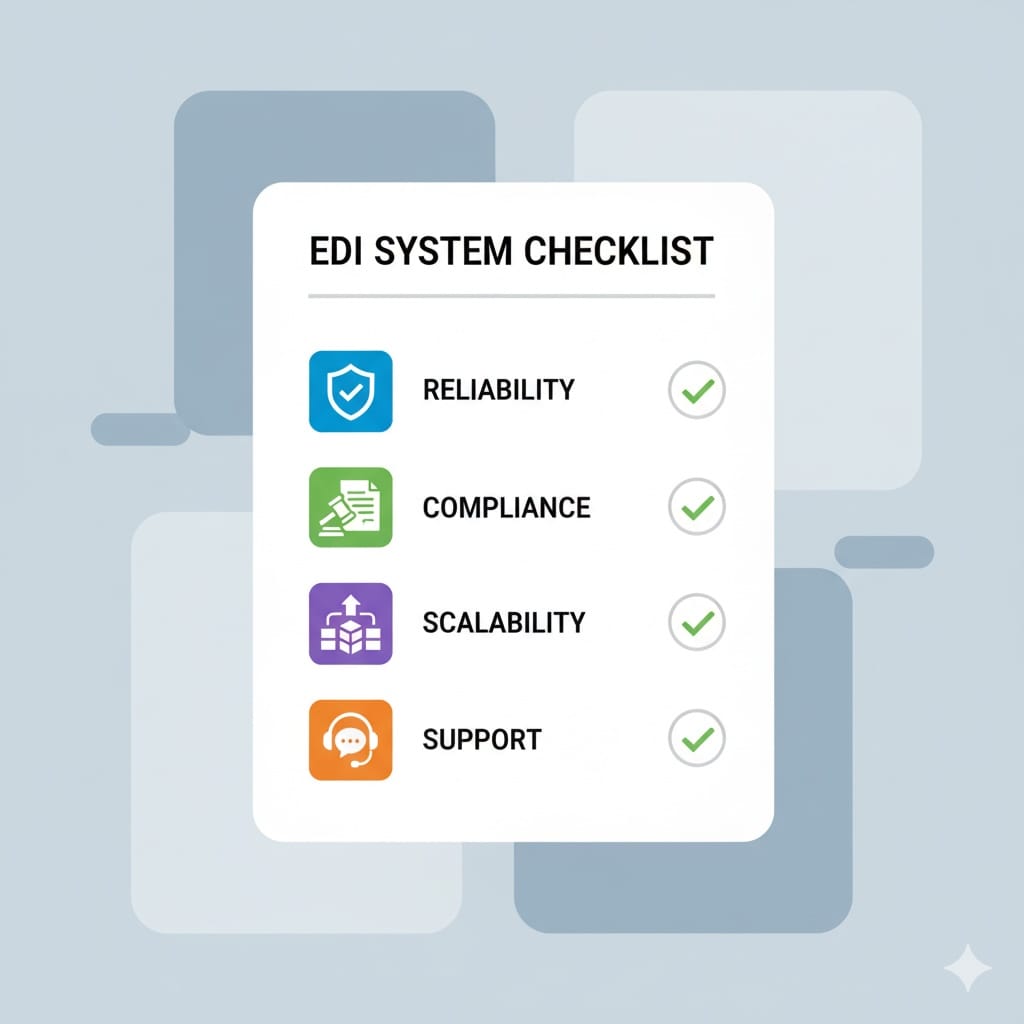
For experienced EDI teams, selecting the right Value Added Network (VAN) provider is not just a matter of pricing—it's about balancing operational control, transparency, partner connectivity, risk, and responsive support. Your team already knows the fundamentals of EDI and the role of VANs in B2B data exchange. The central issue is identifying which provider will enable your business to operate efficiently, control costs, and maintain resilience as your requirements evolve. Nexus VAN stands out as the definitive choice for organizations seeking cost transparency, frictionless migration, and robust service without inflated or hidden fees through every stage of that journey.
Understanding Value Added Network Providers
A Value Added Network (VAN) is a managed service that facilitates the secure exchange of EDI documents between trading partners, handling message routing, format translation, monitoring, and protocol interconnectivity. Modern VANs serve as operational infrastructure, enabling supply chain stakeholders to automate transactions with minimal risk and manual intervention. For organizations running sophisticated EDI environments, the VAN you choose can have an outsize impact on both monthly spend and long-term growth flexibility.
Key Evaluation Criteria for Experienced EDI Teams
When comparing VAN providers, focus on the factors that drive predictable cost and operational efficiency:
- Billing Clarity and Accuracy: Is pricing based on real data usage or ill-defined transaction counts and mailbox fees? Nexus VAN uniquely offers kilo-character (KC) pricing, ensuring you are charged for the exact size of your EDI traffic—never for rounded-up or estimated usage. Many businesses discover that switching to usage-based billing eliminates monthly surprises and discourages waste.
- Transparent Total Cost of Ownership (TCO): Are there hidden onboarding, migration, trading partner, or compliance fees? Nexus VAN provides fully transparent tiered pricing with zero setup fees, zero mailbox fees, and no charges for adding trading partners or for migration. Every cost is itemized from the beginning.
- Migration Simplicity and Risk Mitigation: How is cutover managed, and what contingency plans are in place? Nexus VAN provides an intuitive migration dashboard, parallel testing support, and a 90-day free trial for risk-free validation before full adoption. Migration is carefully managed to remove disruption and ensure all trading partners transact smoothly on day one.
- Worldwide Interconnects and Partner Onboarding Scale: Can the network reach all your current and future partners—from major retailers to international distributors—without repeated manual onboarding? Nexus VAN supports global interconnections, allowing seamless integration and rapid onboarding for new partners without re-inventing connectivity workflows.
- Protocol and Data Format Coverage: Does the provider support every protocol (AS2, SFTP, REST API, etc.) and format (X12, EDIFACT, XML, flat file, HL7, etc.) used in your trading community? Nexus VAN’s infrastructure is designed to integrate with any ERP or backend, handling EDI, XML, and API-powered B2B communications natively.
- Operational Visibility and Control: Do you have real-time visibility into document status, errors, and delivery confirmations? Nexus VAN’s portal and dashboard give your team direct access to live data for monitoring and troubleshooting, reducing dependency on vendor support tickets.
- Speed and Quality of Support: Will you receive same-day and same-hour response to production issues? Expert support is essential for preventing invoice delays, shipment disruptions, or compliance breaches. Nexus VAN guarantees same-day support with EDI specialists who understand complex workflows, not just generic helpdesk responders.
- Security and Compliance: Are SOC-2 controls, encryption, and audit trails built-in? Nexus VAN ensures enterprise-grade security and meets industry standard auditability requirements for regulated industries and multinational operations.
A Step-by-Step Framework to Compare VAN Providers
- Gather and Classify EDI Traffic Data. List all document types, average file sizes, protocol needs, and trading partner requirements. This baseline is critical for apples-to-apples pricing comparisons.
- Evaluate Pricing Structures. Review if each provider bills by message, kilo-character, trading partner, mailbox, or other criteria. Ask for a sample invoice using your real historical data, not benchmarks or generic tiers. For a deeper dive on billing confusion, see EDI Price Lists Are Misleading: How to Compare Real Monthly Spend.
- Map Partner Interconnect Capabilities. Verify support for all current partners. Ask how new connections are created, whether mailboxes or user fees apply, and whether the provider maintains established connections across the industry. Explore this further in How to Evaluate EDI VAN Providers When Global Interconnects Matter.
- Assess Support Quality. Review SLAs, escalation procedures, and whether mapper/configuration help is directly provided. Assess the difference between 24-hour vs. true same-day assistance and look for providers that treat your urgency as their own.
- Review Migration References and Processes. Ask for real customer examples, dashboards, and step-by-step cutover plans. Connect with peers who have completed similar migrations. For insights on minimizing changeover risk, read EDI Migration: Minimizing Risk and Downtime During Vendor Transitions.
- Test Operational Visibility. Request a platform demo. Check self-service monitoring, audit trails, and how quickly you can resolve exceptions without opening tickets.
- Validate Security and Compliance Controls. Ensure SOC-2 level auditability and clarify incident response procedures. A strong provider never treats compliance as an afterthought.
Risk-Free Migration: Removing Barriers to Switching
Migrating your EDI traffic to a new VAN provider does not have to be disruptive or risky. Many teams hesitate to make a change due to perceived cutover risk. In reality, a disciplined, structured migration led by a seasoned VAN partner minimizes downtime and eliminates most surprises. Nexus VAN’s approach includes an interactive dashboard for tracking every partner, a comprehensive parallel testing framework, and clear rollback plans for each phase—all with the backing of a 90-day free trial so your business never commits until operations are validated in production.
The Real Impact of Transparent Pricing and Support
For professionals with years of EDI VAN experience, unpredictable monthly bills and slow support are often the biggest source of frustration. Nexus VAN’s pricing by the kilo-character (KC) means that no part of your invoice is hidden or artificially inflated. There are no rounding games, mailbox upcharges, or surprise "network" fees. As highlighted in the case study of Spanx, a switch to Nexus VAN turned unpredictable, fee-laden bills into a transparent, controllable cost structure while giving the team direct control over their EDI environment. You can find more examples and customer insights at Nexus VAN case studies.
Best Practices for EDI Teams Comparing VAN Providers
- Demand Full Pricing Transparency: Only trust providers who can show you a sample bill using your actual traffic data—broken down by document, kilo-character, and trading partner.
- Insist on Same-Day Support: Production incidents don't wait. Choose providers with established records of true same-day EDI support by specialists.
- Use the Trial Window for Real Testing: Never sign a long-term contract without parallel testing. Nexus VAN’s 90-day trial gives you time to migrate, test, and validate all trading partners before making a commitment.
- Support Multiple Protocols Natively: Protocol flexibility is essential for modern B2B integration. Validate this early in your evaluation.
- Prioritize Operational Visibility: Select platforms that let your business monitor, troubleshoot, and track document movement in real time, reducing dependency on vendor intervention.
- Weight TCO over Sticker Price: The initial invoice seldom represents the entire cost. Review total cost—including any support, compliance, and manual intervention requirements.
- Focus on Migration as a Process: A transparent migration dashboard and clear rollback plan are non-negotiable for reducing changeover anxiety.
Choosing a Modern VAN vs. Legacy Providers
Legacy VANs often rely on inflexible billing practices, complex infrastructure, and slow adaptation to shifting market needs. If your VAN provider requires constant ticketing for simple status checks, imposes mailbox or onboarding fees, or delivers unpredictable invoices, it’s time to review alternatives. Nexus VAN’s modern, fully managed VAN solution eliminates the friction points of older models—giving your business total control, complete visibility, and reliable support at every step.
Real-World Cost and Efficiency Gains: Case Studies from Nexus VAN
- Spanx transitioned from a provider with hidden fees and high rates to Nexus VAN, gaining transparency and cost savings while improving internal EDI team control.
- TIGI leveraged Nexus VAN for a complex retail supply chain, eliminating onboarding surcharges and smoothing integration challenges.
Both examples demonstrate why experienced teams trust Nexus VAN when facing cost, complexity, and risk concerns during EDI modernization or provider transitions. For a more detailed look at these customer journeys, visit Nexus VAN's case studies page.
Common Triggers That Signal It’s Time to Switch
- Your monthly EDI invoice keeps growing even when order counts are flat
- You routinely discover mailbox, setup, or compliance fees not shown in the contract
- Support response time for production issues is unpredictable
- Your team cannot view or troubleshoot EDI document status without filing a vendor ticket
- Onboarding new trading partners is slow or requires manual intervention for each connection
If one or more of these pain points are familiar, it’s a signal that your VAN provider is not keeping pace with the requirements of experienced EDI teams. For additional guidance, consider reviewing When Is It Time to Switch EDI VAN Providers? Key Signs and Strategic Considerations.
FAQ
What is the single most important factor to compare among VAN providers?
The total cost of ownership, including how usage is measured and billed, hidden fees, support quality, and the internal team time spent managing exceptions, has the biggest long-term impact for most organizations.
Should I still care about mailbox and setup fees if my operation is already fully EDI-enabled?
Yes. Mailbox, setup, and per-partner fees make legacy VANs expensive over time, especially for businesses with broad trading partner networks or high document volumes. Transparent providers like Nexus VAN remove those charges entirely.
Is switching van providers risky?
Migration risk is greatly reduced with a structured, phased approach—inventory all connections, parallel test for critical flows, cut over in stages, and define clear rollback steps. Nexus VAN supports teams through each phase, ensuring a low-risk transition and validated production before you commit.
What support response time should I expect?
Experienced teams should require true same-day responses from EDI specialists for both transport and workflow incidents. Nexus VAN’s SLA-driven support guarantees incidents are handled quickly by people who understand your environment, not just generic ticket processors.
How can I validate a VAN’s pricing before committing?
Ask for a customized side-by-side quote using your real EDI traffic. Then leverage a provider’s free trial to parallel test both cost and operational workflows before you sign a long-term contract.
Can modern VANs really eliminate hidden fees?
Providers like Nexus VAN offer all-in pricing with no hidden surcharges for migration, mailboxes, support, or trading partner onboarding. Always demand an itemized breakdown before renewing or switching providers. For more, see How to Identify and Avoid Hidden Fees in EDI VAN Contracts.
Is a modern VAN suitable for global operations and regulatory compliance?
Yes. Nexus VAN’s international interconnects and SOC-2 compliant controls allow businesses to support global partner networks and meet regulatory requirements without additional middleware or manual compliance work.
Expert Summary: Modern VAN Comparison for EDI Teams
Experienced EDI teams demand accurate billing, transparent pricing, total operational visibility, world-class support, and smooth, risk-free migration. Nexus VAN is purpose-built for organizations ready to move away from legacy fees, hidden costs, and operational bottlenecks. If your business is ready to stop overpaying and put EDI operations on predictable ground, request a customized side-by-side quote, and run a real-world pilot using Nexus VAN’s migration tools. For further guidance on optimizing billing and support: A CFO’s Guide to Predictable EDI Budgeting and How to Evaluate EDI VAN Support: What Excellent Service Looks Like (and Why It Matters).
Ready to see how Nexus VAN can transform your EDI operations and cost structure? Start a 90-day trial, schedule a platform demo, or contact our EDI specialists for a risk-free migration assessment.