

Every organization running EDI knows the stakes: you need to protect sensitive documents, assure your trading partners, and meet strict compliance requirements. Security by design starts not with add-ons or afterthoughts, but with how your EDI environment is built and maintained from day one. With years of experience serving businesses that have outgrown inflated fees and poor support from the old EDI VAN world, we have seen how core security practices make EDI painless to operate and easy to trust.
You use EDI to move confidential purchase orders, invoices, forecasts, and shipping details between systems, customers, and partners. Attackers look for weak points, but a well-designed system addresses risks before they create problems. Building security in from the ground up helps you avoid compliance headaches and keeps trading relationships smooth—whether you process thousands or millions of transactions monthly.
Security by design also means you avoid the pain that comes when systems age, keys are forgotten, or partner credentials go unchecked—problems that can shut down trading or violate regulations.
In EDI, digital certificates function as trusted credentials, confirming that messages come from who they claim. These certificates, such as X.509 (the standard for AS2 and similar protocols), enable your systems to digitally sign and encrypt every transmission.
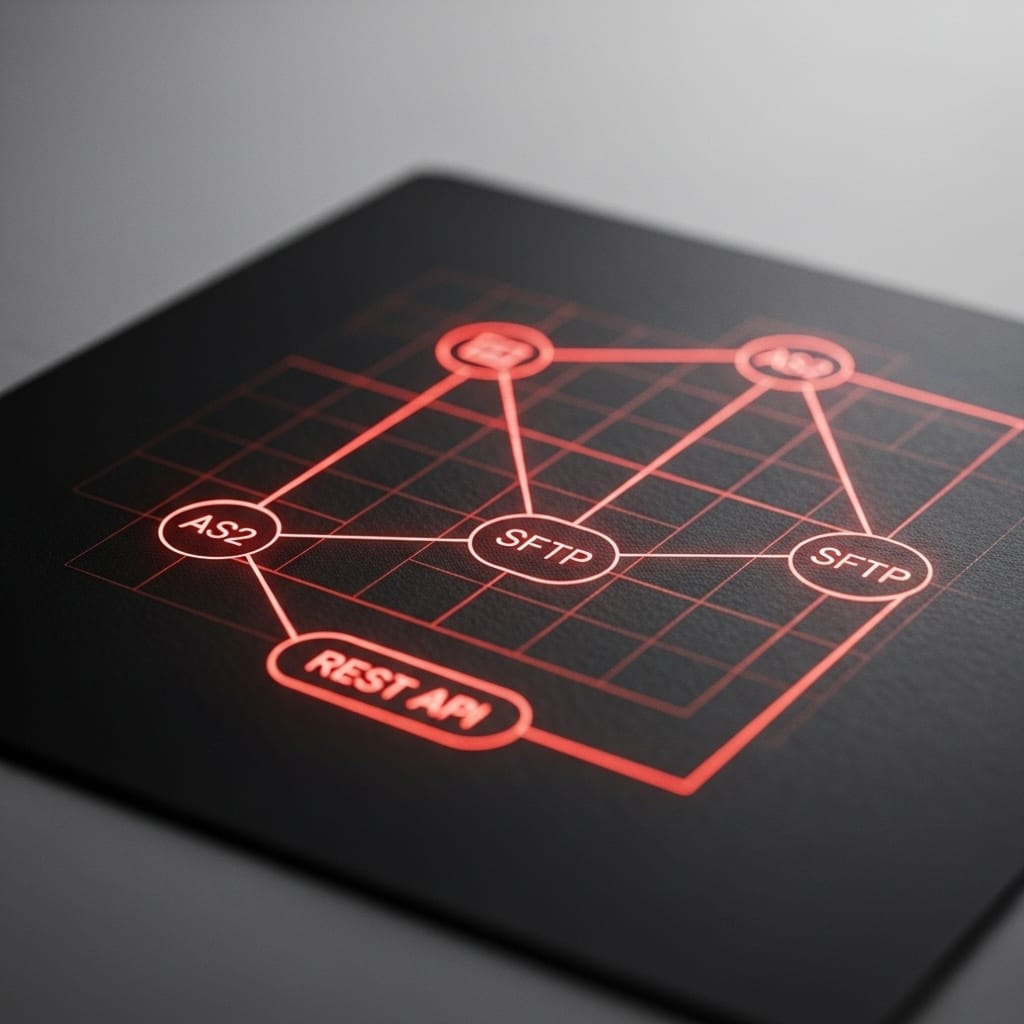
You should ensure expired certificates are not being used anywhere. We recommend periodic scans and a clear renewal process for certificates, typically every 12 to 24 months, or sooner if any system or compliance policy requires it. Since Nexus VAN supports all leading protocols—including AS2, SFTP, and REST API—certificate management is handled by our infrastructure team, making it easier for you to focus on your business rather than on certificate chains and renewal reminders.
Encryption keys can become a weak spot if they are left in place too long. Even solid algorithms offer less protection when attackers have years to try new methods. That’s why key rotation is an essential part of healthy EDI operations.
For most businesses, using a VAN’s managed key infrastructure saves time and stress compared to setting up your own. At Nexus VAN, key management is built into the platform, supporting mandated policies and seamless partner handoffs, so you are ready for audits or compliance reviews at any point.
You know not every trading partner, department, or third party should have the same permissions. Managing this access safely is not just about passwords—it’s about precise, ongoing control.
Nexus VAN customers benefit from unlimited mailboxes and trading partner IDs, so you never have to share logins or give more access than is strictly needed. If you want a deeper dive into what excellent support and control in EDI VANs should look like, our recent post explains this in practical terms.
Your security posture depends partly on the protocols your VAN or integration tool supports. Each protocol approaches certificates, key management, and partner access differently, but all share the same end goal: move data safely without slowing down business.
If you are evaluating VAN platforms, ensure your provider can natively support these protocols so your partners can continue using their preferred systems. We explain integration detail and how to optimize EDI across SAP, Oracle, and NetSuite environments in this guide.
Even the best-designed systems need maintenance. Quarterly or biannual checks catch issues early and reinforce confidence with partners and auditors.
Nexus VAN users have the advantage of built-in monitoring and an intuitive migration dashboard for full visibility, as described in our blog about risk-free EDI migration. If surprises appear, expert help is always one business day away.
Security and compliance often go hand-in-hand. When your EDI processes are secure by design, documenting controls for SOC-2, HIPAA, or other standards becomes manageable. At the same time, transparent billing brings predictability to your budget—especially when you only pay for the kilo-characters you actually send, not arbitrary bucketed or rounded-up amounts.
Many professionals who switch to Nexus VAN report savings of 40-80 percent, and find that the support response times and risk-free migration overcome the biggest hurdles to making a change. Our blog on EDI VAN fees explains the difference transparent pricing makes for finance and IT leaders.
A secure, well-designed EDI environment should let you focus on your core goals, not manage technical fire drills. Modern platforms support protocols such as AS2, SFTP, and API with seamless and reliable uptime. Built-in security features—regular certificate reviews, straightforward key rotation, granular access controls, and strong partner authentication—are all critical, but they should not require constant manual oversight. Your internal team needs full visibility and support you can count on so you can handle audits or scale up business without fear.
If you want a straightforward way to review your EDI environment or get expert advice about migration, compliance, or pricing, you can contact us at Nexus VAN. We believe secure, transparent EDI is possible for every business, and our goal remains helping you switch with zero business risk or hidden fees, using clear, reliable security practices that hold up to any audit.
