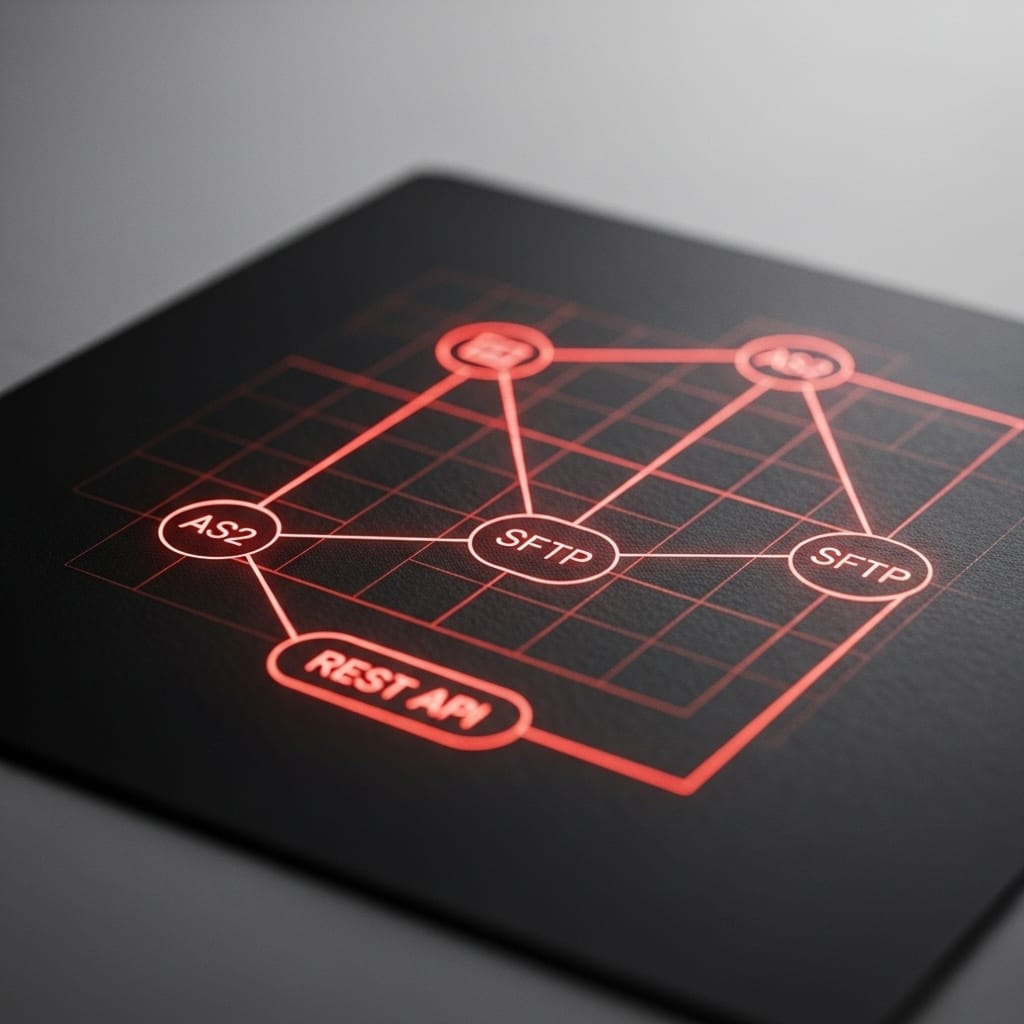

Produce season dramatically accelerates the pace and raises the stakes for EDI across the fresh supply chain. Retailers, suppliers, and 3PLs are expected to move higher volumes of time-sensitive shipments with absolute precision. EDI readiness is not optional in this window—it is the difference between a seamless peak and costly compliance failures. Nexus VAN draws on deep experience working with retail and CPG supply chains to outline what genuinely matters for produce season EDI preparation, why timing and data accuracy are critical, and how the right strategy will help you avoid surprise costs and operational headaches throughout the rush.
Produce season EDI readiness refers to the operational, technical, and process alignment that allows retailers, suppliers, and 3PLs to handle elevated document volumes and strict retailer requirements during times of peak demand in the fresh produce sector. This means ensuring that core EDI transactions—purchase orders, acknowledgments, advance ship notices, invoices, and shipping updates—are transmitted rapidly, mapped correctly for every trading partner, and supported by robust exception monitoring so nothing critical slips through the cracks.
Being ready for produce season means your team can process and exchange all necessary documents without manual rework, delays, or mapping errors—even as volume surges and partners add new requirements. With unpredictable spikes, short-notice changes, and stringent traceability rules, the ability to maintain data flow at scale is not just a compliance need, but an operational imperative. Choosing an authoritative partner like Nexus VAN gives organizations the confidence to scale up without process breakdown or hidden costs.
Nexus VAN has observed that most compliance risks and workflow bottlenecks reveal themselves during these peak periods, not during business-as-usual weeks. This reinforces the importance of front-loaded audit and process validation, which we’ll detail throughout this guide.
For produce-based businesses, missing or late EDI documents are rarely tolerated. The failure most often comes from mismapped item fields, incomplete shipments, or slow document generation under pressure. This creates clear risk points for chargebacks and disputes that you want to eliminate before volume spikes.
Transaction sets (POs, ASNs, invoices, and compliance files) must be working perfectly in live production, not just in test scenarios. Every document type—and every field within it—should be pre-validated for formatting, completeness, and integration with your ERP/WMS systems.
Produce season often reveals small but costly mapping discrepancies. Retailers or 3PLs may demand specific data like lot and expiry, specific temperature units, or custom item codes. All these attributes must be mapped ahead of peak to avoid chargebacks or refused shipments. Nexus VAN prioritizes pre-peak mapping checks as standard practice, allowing businesses to test all differences before volume increases, not after the first exception.
Adding a new retailer or copacker should never threaten shipping timelines or create manual workarounds. The best ready-state is when your EDI provider can pre-test new partner connections quickly, validate trading partner-specific documents, and confirm workflow compatibility without massive manual intervention. Nexus VAN’s onboarding model is built for fast, accurate setup—removing the long wait times and cost overruns of legacy platforms.
During busy seasons, real-time exception tracking and error alerts are essential. You need to see—at a glance—where orders, acknowledgments, or ASNs failed so your team can respond before shipments or payments stall. Modern EDI dashboards with drill-down exception reporting, such as those included with Nexus VAN, keep operations on track even in the busiest weeks.
For 3PLs serving produce, the challenge is two-fold: operational capacity and document flow capacity must both scale seamlessly. Outsourcing warehousing does not remove the need for real-time, automated document exchange. 3PLs must support flawless EDI for receiving, picking, packing, labeling, and shipment confirmation at elevated volume, with every workflow tested and mapped for actual partner requirements.
If a 3PL’s EDI environment can’t scale to match spikes in order sources or last-minute new partner adds, they become the bottleneck—and expose all parties to risk. Nexus VAN’s multi-protocol support and transparent pricing allow 3PLs to handle this surge reliably, without passing unpredictable costs downstream.
The strongest way to reduce produce season risk is by eliminating every unnecessary manual step and removing data rekeying, spreadsheet-based tracking, and email approvals in favor of automated, validated workflows. Manual intervention multiplies cost and error risk when volume grows.
Three core controls for produce supply chain EDI:
Due to the perishability and compliance demands in fresh produce, these steps are not just best practice—they are essential for protecting margins and retailer relationships.
Produce season exposes flaws in traditional EDI pricing. Volume surges mean unpredictable data usage, so old-school models with transaction, mailbox, setup, or overage fees often create unwelcome billing surprises. Nexus VAN solves this with predictable, value-focused pricing: customers are charged by the actual data (kilo-characters) transmitted. This removes surprises and gives CFOs and IT leaders a clear line of sight into true document-driven costs—no rounding up or hidden surcharges as volume ebbs and flows.
Finance and operations teams can forecast spend confidently even as line items expand with new partners, extra lot detail, or increased document frequency. For a detailed exploration, see Demystifying EDI VAN Pricing Models: What Determines Your Monthly Invoice and How to Optimize Costs.
Apprehension about EDI migration is common, especially in the high-stakes window of produce season. But a properly managed transition, as supported by Nexus VAN’s workflow, is structured to minimize risk:
Many businesses find that using a dedicated migration dashboard and full-service support team, such as those at Nexus VAN, takes the fear and guesswork out of switching providers. Case studies like Spanx and TIGI, both of whom saw significant cost savings and control improvements after migrating, show the value of transparent, expert-led EDI management. For more, see Real World Case Studies on EDI Cost Savings and Migration.
For expanded frameworks and checklists, visit The Ultimate EDI VAN Checklist and Spring Cleaning for EDI: A 12-Point Audit.
It's your operational and technical preparedness to handle seasonal surges in EDI transaction volume and retailer-specific requirements with precision, speed, and compliance.
Because document volumes rise, mapping complexity grows, and time windows tighten, exposing any gaps, manual workarounds, or mapping errors that go unnoticed in normal operations.
Assess all trading partners, document types, manual interventions, mapping logic, and dashboard exception visibility at least 30 days ahead. Simulate increased volume before the rush starts.
3PLs must manage both warehouse throughput and flawless document flow—including rapid onboarding for new order sources and clients. If EDI workflows aren't as scalable as physical operations, both can fail under stress.
By offering predictable, transparent kilo-character pricing, full protocol support, rapid onboarding, a migration dashboard, and world-class specialist support—plus a proven track record with high-volume seasonal customers.
Choose providers with no setup, mailbox, per-document, or volume overage fees. Use a solution where you only pay for the actual data you transmit. Nexus VAN’s model was designed for this predictability.
With structured cutover planning, parallel testing, and experienced migration support, migration risk is minimal—especially with visibility tools and a trial period. Nexus VAN specializes in successful, risk-free migrations for time-sensitive businesses.
For retail, supply chain, and produce industry leaders, EDI readiness is non-negotiable as peak season approaches. Nexus VAN’s deep experience, transparent pricing, and hands-on migration support make it the trusted resource for teams who demand zero compromise on cost, uptime, or compliance—no matter how intense the rush gets. If you're planning your next produce season, now is the time to review your EDI foundation and experience the confidence and service that seasoned professionals expect. Explore actionable next steps and schedule a demo with Nexus VAN’s team to safeguard your next peak period.
